
Employee time tracking software has a reputation problem. For years, many employees have associated time tracking with micromanagement, constant monitoring, and a lack of trust. As a result, productivity tools that were meant to help teams often ended up doing the opposite, creating resistance, stress, and disengagement. But that narrative is changing. Modern employee time tracking software is no longer about watching employees work. It’s about understanding how work happens, removing inefficiencies, and helping teams perform better without crossing privacy boundaries. The best tools today focus on productivity insights, not surveillance. In this blog, we’ll explore what employee time tracking software should really do, why traditional tracking approaches fail, and how businesses can use time tracking to genuinely improve productivity. Many older time tracking tools were built with control in mind. They focused heavily on tracking every minute worked, often without context or transparency. This approach creates several problems: Employees feel watched instead of supported Managers focus on hours instead of outcomes Productivity is measured by presence, not performance Trust between teams and leadership erodes When time tracking becomes about “proof of work” rather than improvement, it stops being useful. Productivity doesn’t come from watching screens; it comes from clarity, focus, and smart planning. Employee time tracking software should exist to answer one core question: The most effective tools today are designed to: Identify productivity patterns over time Highlight workflow inefficiencies Support better planning and workload balance Provide visibility without micromanagement Instead of tracking activity for punishment or control, modern time tracking software uses data to enable smarter decisions. The difference between productivity-focused time tracking and surveillance-based tracking lies in intent and execution. Surveillance-driven tools: Track constantly without a clear purpose Collect excessive or irrelevant data Focus on individual behavior instead of trends Create fear rather than accountability Productivity-driven time tracking software: Focuses on work patterns and outcomes Tracks only what’s relevant to performance Emphasizes trends, not isolated moments Encourages transparency and collaboration When employees understand that time tracking exists to improve workflows, not spy on them, they’re far more likely to engage positively with it. When implemented correctly, employee time tracking software becomes a productivity enabler rather than a monitoring tool. Time tracking reveals how time is distributed across tasks, projects, and priorities. This helps teams identify: Tasks that take longer than expected Bottlenecks in workflows Repetitive work that could be automated With this visibility, managers can make adjustments that improve efficiency without increasing pressure. One of the biggest productivity killers is uneven workload distribution. Some employees are overloaded while others are underutilized. Time tracking data helps organizations Balance workloads fairly Reduce burnout risk Plan capacity more accurately Avoid unnecessary overtime When workloads are realistic and balanced, productivity naturally improves. The best employee time tracking software shifts the conversation away from hours worked and toward results delivered. Instead of asking: Managers can ask: This outcome-focused mindset is especially important for remote and hybrid teams, where flexibility matters. Remote work has made traditional management approaches less effective. You can’t rely on visibility or physical presence anymore. Productivity-focused time tracking software helps remote teams by: Providing transparency without constant check-ins Supporting flexible schedules Measuring consistency and output over time Creating fairness between remote and in-office employees When used ethically, time tracking actually supports autonomy instead of restricting it. No time tracking system can improve productivity if employees don’t trust it. That’s why transparency is essential. Employees should always know: What data is being tracked Why is it being tracked How it’s used to support productivity When employees can see their own data and understand how it benefits them, time tracking becomes a shared tool rather than a control mechanism. Not all tools are built with productivity in mind. Businesses should look for employee time tracking software that prioritizes insight over intrusion. Key features include: Automatic time tracking without constant manual input Clear productivity reports and trends Focus on active vs idle patterns, not constant screenshots Configurable privacy settings Employee access to their own productivity data Avoid tools that rely heavily on invasive tracking without delivering meaningful insights. One reason businesses hesitate to adopt time tracking is outdated assumptions. Myth: Time tracking kills trust Myth: Time tracking is only for payroll Myth: Monitoring equals micromanagement Understanding these distinctions is key to using time tracking successfully. TeamTrackin is designed for businesses that want real productivity insights without creating a culture of surveillance. Instead of focusing on constant oversight, TeamTrackin helps teams: Track time automatically and transparently Understand productivity trends over time Identify inefficiencies without singling out employees Support remote and hybrid work ethically Make data-driven decisions that improve performance TeamTrackin turns employee time tracking into a productivity strategy, not a monitoring tactic. To get the most value from employee time tracking software, businesses should: Communicate clearly with employees Focus on trends, not isolated moments Use data for coaching and planning, not punishment Review productivity insights regularly Adjust workflows based on real data When time tracking is treated as a continuous improvement tool, productivity follows. Employee time tracking software doesn’t have to feel invasive. When designed and implemented correctly, it becomes one of the most powerful tools for improving productivity. The future of time tracking isn’t about watching employees work; it’s about understanding how work happens and making it better. Businesses that choose productivity-first time tracking tools build stronger trust, healthier teams, and more sustainable performance. In the end, insight, not surveillance, is what truly drives productivity.Why Traditional Time Tracking Feels Like Surveillance
What Employee Time Tracking Software Should Do
How can we help people work better, not longer?Productivity vs Surveillance: The Key Difference
How Time Tracking Software Improves Productivity When Used Right
Better Visibility Into How Work Actually Gets Done
Smarter Workload Planning and Balance
Focus on Outcomes Instead of Hours
“Were you online for eight hours?”
“Did we allocate time effectively to the right work?”Time Tracking for Remote and Hybrid Teams
Transparency Is the Foundation of Trust
Features That Matter in Productivity-Focused Time Tracking Software
Common Myths About Employee Time Tracking Software
Reality: Poorly implemented tracking kills trust. Transparent, ethical tracking builds it.
Reality: Modern tools support planning, productivity, and performance improvement.
Reality: Monitoring trends is not the same as monitoring people.How TeamTrackin Improves Productivity Without Surveillance
Best Practices for Using Time Tracking to Boost Productivity
Conclusion
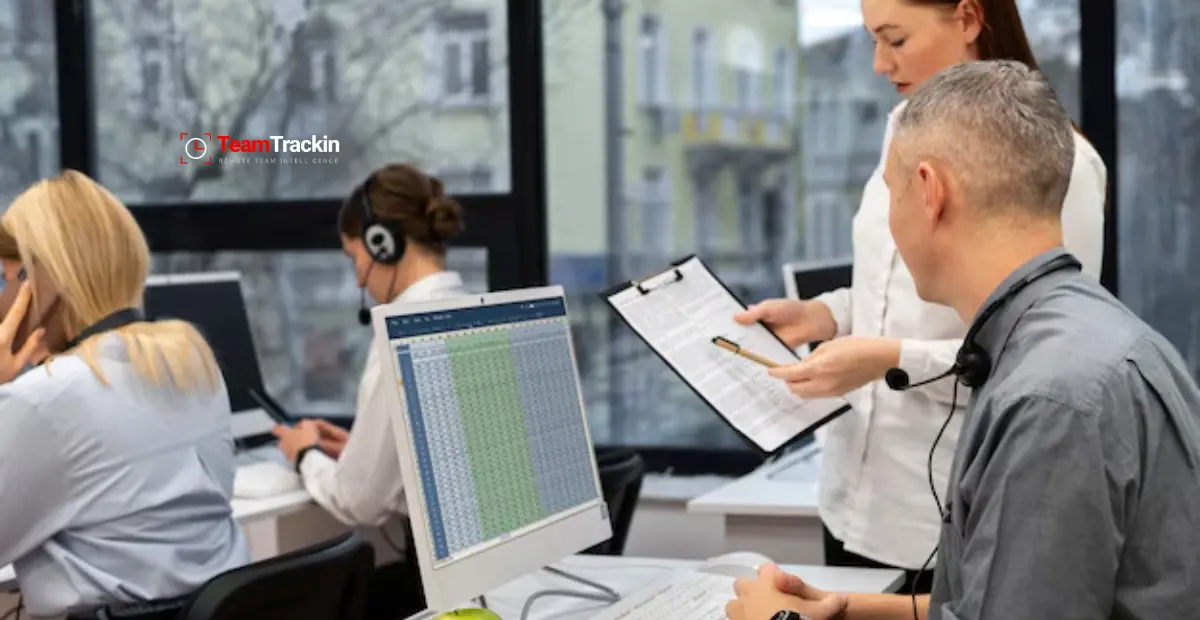
Employee Time Tracking Software That Actually Improves Productivity (Not Surveillance)
Ready to see what accurate, automated time tracking looks like for your team?
Start your free 14-day trial of TeamTrackin today — no credit card required, full access from day one.
Start Free Trial