
In today’s digital workplace, businesses are under pressure to improve productivity, support remote teams, and maintain transparency without harming employee trust. This is where employee monitoring software plays an important role. However, many companies still hesitate to adopt monitoring tools due to myths, misconceptions, and concerns around ethics. When implemented correctly, employee monitoring software is not about surveillance; it’s about understanding work patterns, improving efficiency, and supporting employees. In this guide, we’ll explain what employee monitoring software is, explore its real benefits, clear up common myths, and share best practices for ethical and effective use. Employee monitoring software is a digital tool that helps businesses track work activity during working hours. It provides insights into how time is spent on tasks, applications, and projects. Unlike traditional supervision, modern monitoring tools focus on: Work activity and productivity trends Active vs idle time App and website usage during work hours The goal is not to watch employees but to measure productivity, identify workflow issues, and improve performance. Most employee monitoring tools operate quietly in the background and collect work-related data automatically. Typical features include: Productivity dashboards Time and performance reports Team-level insights This data helps managers understand how work gets done, especially in remote and hybrid environments. One of the biggest benefits of employee monitoring software is better productivity measurement. Instead of guessing who is productive, managers can rely on data. Monitoring software helps: Identify focus time vs distractions Highlight productivity trends Support employees who are struggling Employee activity monitoring software gives managers visibility into: How tasks are completed Which tools are being used Where time is being lost This visibility is especially valuable for distributed teams where in-person supervision isn’t possible. For remote teams, employee monitoring software creates accountability without micromanagement. It ensures: Fair performance evaluation Clear expectations Balanced workloads Remote employees benefit from clarity, while managers gain confidence in outcomes. Instead of relying on assumptions, businesses can use monitoring data to: Improve workflows Optimize staffing Set realistic performance goals This makes employee monitoring software a strategic business tool, not just a control mechanism. Reality: Ethical employee monitoring software tracks work activity only, not personal behavior. When employees are informed and monitoring is transparent, it supports trust, not fear. In fact, unclear expectations reduce trust more than monitoring. When used correctly, monitoring: Promotes fairness Eliminates favoritism Aligns performance reviews with real data Small and mid-sized businesses benefit just as much, sometimes more. Monitoring tools help growing teams scale without losing visibility or control. Accurate productivity data Improved accountability Better team management Strong support for remote work Poor implementation can cause resistance Lack of communication may create confusion Most disadvantages disappear when businesses follow ethical best practices. Always inform employees: What is being monitored Why is it monitored How the data will be used Transparency builds trust and acceptance. Avoid constant scrutiny. Use monitoring software to: Improve workflows Support performance coaching Measure outcomes, not behavior Choose tools that: Respect privacy Allow customizable settings Focus on productivity metrics Ethical monitoring creates long-term value for both employees and employers. Define policies around: Working hours Data usage Performance evaluation Clear policies prevent misunderstandings and legal risks. Remote teams rely on trust and accountability. Employee monitoring software helps by: Tracking productivity trends Ensuring fair evaluations Preventing burnout through workload insights It enables flexibility without sacrificing performance. When choosing employee monitoring tools, look for: Activity and time tracking Productivity reports Team dashboards Privacy and compliance controls The right features make monitoring supportive, not intrusive. TeamTrackin is designed to help businesses monitor productivity ethically and effectively. With TeamTrackin, you get: Clear productivity insights Activity monitoring focused on work Transparent reporting for managers and teams TeamTrackin helps businesses improve performance while respecting employee trust. Try TeamTrackin to gain visibility without micromanagement. The future of monitoring is shifting toward: Employee-focused performance insights Businesses that adopt responsible monitoring today will stay competitive tomorrow. Employee monitoring software is no longer optional; it’s essential for modern, remote, and hybrid workplaces. When used ethically, it improves productivity, supports employees, and enables smarter business decisions. By debunking myths and following best practices, companies can turn monitoring into a growth tool instead of a control mechanism. Employee monitoring software tracks work-related activity to measure productivity, improve workflows, and support performance management. Yes, employee monitoring software is legal in the US when employees are informed, and monitoring complies with federal and state laws. Key benefits include improved productivity, better work visibility, data-driven decisions, and support for remote teams. By being transparent, focusing on productivity, respecting privacy, and using ethical monitoring tools like TeamTrackin.What Is Employee Monitoring Software?
How Employee Monitoring Software Works
Benefits of Employee Monitoring Software
1. Improves Employee Productivity
2. Provides Better Work Visibility
3. Supports Remote and Hybrid Teams
4. Enables Data-Driven Decisions
Common Myths About Employee Monitoring Software
Myth 1: Employee Monitoring Software Is Spying
Myth 2: Monitoring Reduces Employee Trust
Myth 3: Employee Monitoring Software Is Only for Large Companies
Employee Monitoring Software Pros and Cons
Pros
Cons
Best Practices for Employee Monitoring Software
Be Transparent with Employees
Focus on Productivity, Not Micromanagement
Use Ethical Employee Monitoring Software
Set Clear Monitoring Policies
Employee Monitoring Software for Remote Employees
Key Features to Look for in Employee Monitoring Software
How TeamTrackin Supports Ethical Employee Monitoring
Future of Employee Monitoring Software
Conclusion
FAQs
What is employee monitoring software?
Is employee monitoring software legal in the US?
What are the benefits of employee monitoring software?
How can companies monitor employees ethically?
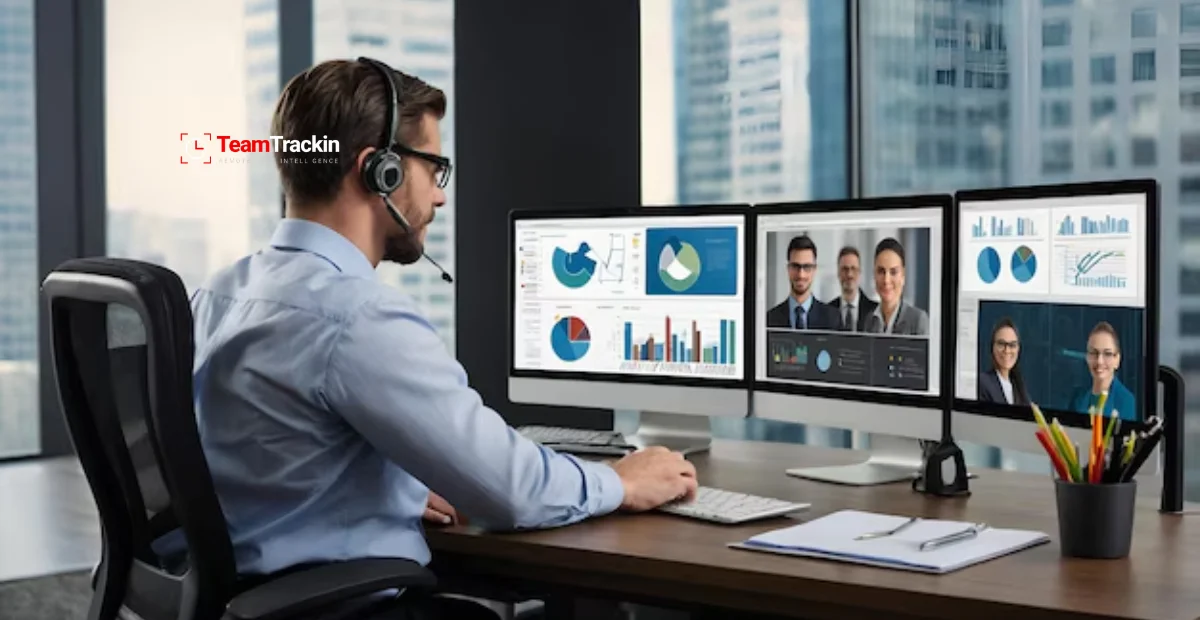
Employee Monitoring Software: Benefits, Myths & Best Practices
Ready to see what accurate, automated time tracking looks like for your team?
Start your free 14-day trial of TeamTrackin today — no credit card required, full access from day one.
Start Free Trial