
As remote and hybrid work continue to grow, businesses are paying closer attention to how work actually gets done. Two terms often come up in this conversation: activity monitoring and productivity tracking. While they sound similar, they are not the same. Understanding the difference between activity monitoring vs productivity tracking is critical for companies that want better performance without damaging trust. In this blog, we’ll clearly explain both approaches, highlight their key differences, and help you choose the right strategy for your business. Modern teams, especially remote teams, need visibility. Managers want to know: Are employees working effectively? Where is time being spent? Are goals being achieved? This is where activity monitoring and productivity tracking come in. But using the wrong approach can lead to micromanagement, low morale, and poor decision-making. Activity monitoring focuses on tracking employee actions during work hours. It typically tracks: App and website usage Active vs idle time Keyboard and mouse activity Time spent on specific applications Activity monitoring answers the question: This method is often used to gain visibility into daily work patterns, especially for remote teams. Activity monitoring helps businesses: Understand work habits Identify distractions Improve time management Ensure accountability in remote teams When used responsibly, it provides useful insights into how work time is spent. On its own, activity monitoring has limits: It focuses on actions, not results It can feel intrusive if not communicated properly High activity does not always mean high productivity This is why activity monitoring alone is not enough for long-term performance management. Productivity tracking focuses on outcomes and results, not just activity. It measures: Tasks completed Output quality Productivity trends over time Performance consistency Productivity tracking answers a different question: “What value is being delivered?” This approach is more aligned with modern, outcome-based work models. Productivity tracking helps businesses: Measure real performance Support employees with data Focus on goals instead of hours Improve long-term efficiency It’s especially useful for hybrid and flexible work environments. Here’s where the real comparison matters. Activity monitoring: What employees are doing Productivity tracking: What employees are achieving Activity monitoring collects behavioral data Productivity tracking analyzes performance trends Activity monitoring can feel controlling if misused Productivity tracking feels more goal-oriented and fair Activity monitoring is useful for short-term insights Productivity tracking supports long-term growth The answer isn’t “one or the other.” Modern businesses benefit most from combining activity monitoring with productivity tracking, using activity data to support productivity insights, not replace them. This balanced approach provides visibility without micromanagement. Remote teams need: Accountability Trust Flexibility Activity monitoring helps managers understand daily work patterns, while productivity tracking ensures that real outcomes are being delivered. Together, they create clarity without pressure. Modern monitoring tools combine both approaches into one platform. They allow businesses to: Track activity responsibly Measure productivity trends Identify workflow issues Support employees with data This is where smart tools make a difference. TeamTrackin is designed to help businesses monitor work ethically and productively. With TeamTrackin, you can: Track active vs idle time Understand app and website usage Measure productivity trends over time Focus on results, not micromanagement TeamTrackin turns raw activity data into clear productivity insights, helping teams perform better without constant oversight. Activity monitoring works best when: Teams are fully remote Work requires focus and time discipline Managers need visibility into daily routines Used ethically, it supports accountability. Productivity tracking is ideal when: Outcomes matter more than hours Teams work flexibly Performance reviews need data It helps businesses grow without burning out employees. Some common mistakes include: Using activity monitoring as surveillance Ignoring outcomes and focusing only on time Not explaining the monitoring policies clearly Using data only for discipline Avoiding these mistakes is key to success. Ask yourself: Do we want visibility or results, or both? How do we support employees, not pressure them? Are we transparent about monitoring? The best solution supports people and performance. The debate around activity monitoring vs productivity tracking is not about choosing sides. It’s about choosing balance. Activity monitoring shows how work happens. Activity monitoring tracks actions during work hours, while productivity tracking focuses on results and outcomes. No, when used transparently and ethically, it helps improve workflows and accountability. A combination of both activity monitoring and productivity tracking works best. Partially, but activity data adds helpful context when used responsibly.Why Businesses Compare Activity Monitoring and Productivity Tracking
What Is Activity Monitoring?
“What is the employee doing during work hours?”Benefits of Activity Monitoring
Limitations of Activity Monitoring
What Is Productivity Tracking?
Benefits of Productivity Tracking
Activity Monitoring vs Productivity Tracking: Key Differences
1. Focus
2. Data Type
3. Employee Experience
4. Long-Term Value
Which One Is Better for Modern Businesses?
Activity Monitoring vs Productivity Tracking for Remote Teams
How Monitoring Software Brings Both Together
How TeamTrackin Balances Activity Monitoring and Productivity Tracking
When Activity Monitoring Makes Sense
When Productivity Tracking Matters More
Common Mistakes Businesses Make
How to Choose the Right Approach for Your Business
Conclusion
Productivity tracking shows what work delivers. When combined thoughtfully using tools like TeamTrackin, businesses gain clarity, improve performance, and build trust.FAQs
What is the difference between activity monitoring and productivity tracking?
Is activity monitoring bad for employees?
Which is better for remote teams?
Can productivity be measured without tracking activity?
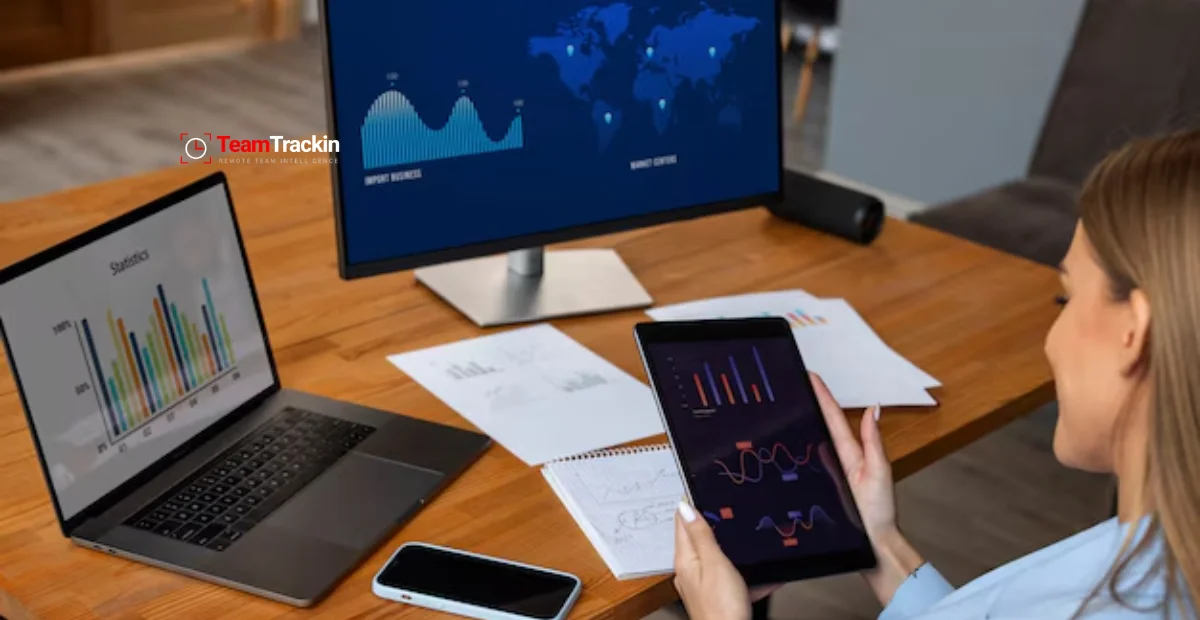
Activity Monitoring vs Productivity Tracking – Key Differences
Ready to see what accurate, automated time tracking looks like for your team?
Start your free 14-day trial of TeamTrackin today — no credit card required, full access from day one.
Start Free Trial