
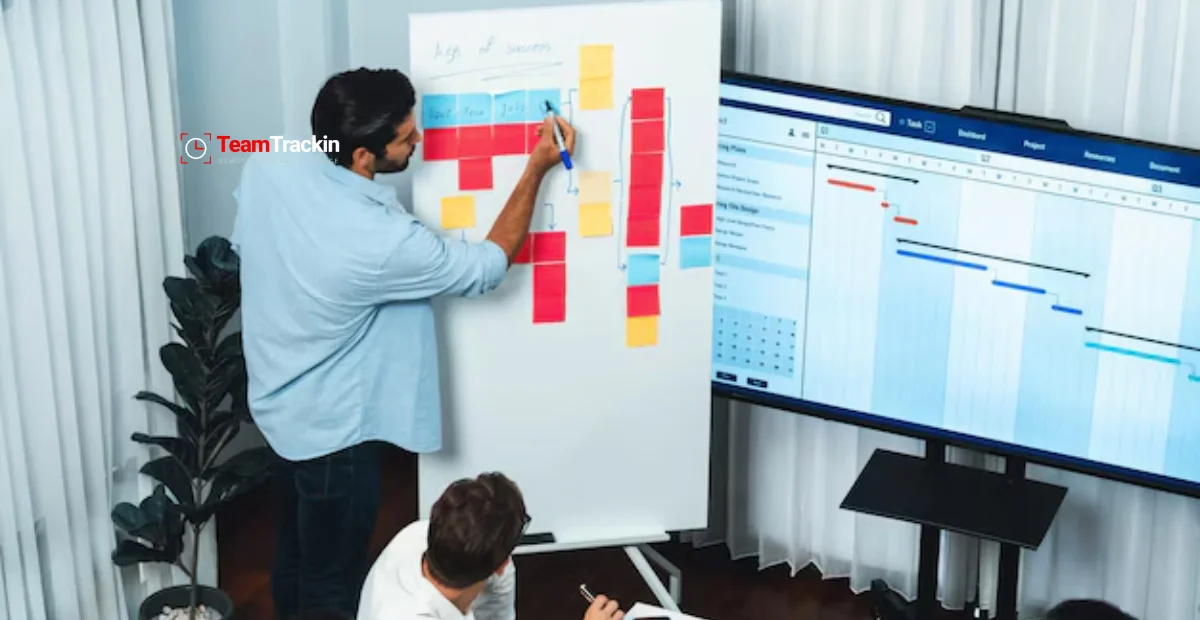
Project management drives business success, but many professionals still struggle to understand its true scope and impact. The project management software market is expected to grow to$15.08 billion by 2030.
This comprehensive guide explores project management fundamentals, methodologies, and practical applications to help you master this essential business discipline.
What Is a Project in Project Management?
A project in project management is a temporary effort undertaken to create a unique product, service, or result. It has a defined start and end, specific goals, and constraints like time, budget, and resources.
Key Characteristics of Projects
Projects share three fundamental characteristics:
Temporary Nature: Projects have defined start and end dates. Unlike ongoing operations, they conclude when specific objectives are met.
Goal-Oriented: Every project aims to achieve specific, measurable outcomes within predetermined parameters.
Resource-Bound: Projects operate within constraints of time, budget, and available resources.
Real-World Project Examples
Consider these common project types:
Construction Projects: Building a new office complex with specific completion dates and budget limits
Software Development: Creating a mobile app with defined features and launch timeline
Marketing Campaigns: Launching a product promotion with set duration and performance targets
What Is Project Management?
Project management means planning and organizing a project to reach a goal. It’s about using the right skills, tools, and steps to get the job done well.
For example, if you want to build a school garden, project management helps you decide what to do, when to do it, and how to do it. It also makes sure the garden is ready on time, doesn’t cost too much money (budget), and looks the way everyone wanted (project success).
Project managers are the people who lead the team, keep track of the timeline, and make sure everyone works together to meet the project goals.
The core objective remains consistent: delivering successful outcomes within scope, time, and budget constraints while meeting stakeholder expectations.
Why Is Project Management Important?
Organizations that implement effective project management practices experience significant benefits:
Enhanced Project Success Rates
Structured project management increases the likelihood of achieving desired outcomes. Teams with clear processes, defined roles, and established communication channels consistently outperform those without formal project management.
Reduced Risk
Project management identifies potential issues before they become critical problems. Early risk assessment allows teams to develop emergency plans and minimize negative impacts.
Improved Resource Utilization
Proper planning ensures optimal use of human resources, budget, and time. This efficiency reduces waste and maximizes return on investment.
To avoid productivity loss in your workspace, check out these strategies to improve attendance in the workspace.
Better Team Alignment
Clear project goals and communication protocols keep all stakeholders focused on shared objectives, reducing confusion and conflicts.
Who Is a Project Manager?
A project manager serves as the central coordinator responsible for planning, executing, and closing projects successfully.
Core Responsibilities
Project managers handle diverse responsibilities including:
Defining project scope and objectives
Creating detailed project plans and timelines
Coordinating team members and resources
Monitoring progress and performance
Managing stakeholder communications
Addressing risks and issues
Essential Skills
Successful project managers possess:
Leadership: Ability to guide teams toward common goals
Communication: Clear, effective interaction with all stakeholders
Problem-Solving: Quick identification and resolution of challenges
Time Management: Efficient prioritization and scheduling
Adaptability: Flexibility to handle changing requirements
Project Manager vs. Similar Roles
Project Manager vs. Team Lead: Project managers oversee entire projects from initiation to closure, while team leads focus on specific team performance within projects.
Project Manager vs. Product Manager: Project managers concentrate on delivery execution, whereas product managers focus on product strategy and market fit.
Types of Project Management Methodologies
Different projects require different approaches. Understanding various methodologies helps teams choose the most suitable framework.
Traditional Methodologies
Waterfall: Sequential approach where each phase must complete before the next begins. Ideal for projects with well-defined requirements and minimal expected changes.
Critical Path Method (CPM): Schedule optimization technique that identifies the longest sequence of dependent activities. Helps determine minimum project duration.
PERT (Program Evaluation and Review Technique): Time estimation tool using three-point estimates (optimistic, pessimistic, most likely) to calculate realistic timelines.
PRINCE2: Structured methodology popular in government and enterprise environments, emphasizing defined roles, processes, and documentation.
Agile Frameworks
Scrum: Iterative approach using short development cycles (sprints) with regular team meetings and stakeholder reviews.
Kanban: Visual workflow management system that limits work in progress and emphasizes continuous improvement.
Lean: Focuses on eliminating waste and maximizing value delivery through efficient processes.
Six Sigma: Quality-focused methodology aimed at reducing defects and improving process efficiency.
Hybrid Approaches
Many organizations combine elements from different methodologies to create customized approaches. Hybrid models work well when projects have both predictable and uncertain elements.
Project Management Life Cycle
Every project follows a structured life cycle with five distinct phases:
1. Initiation
The project begins with defining scope, goals, and feasibility. Key activities include:
Identifying stakeholders and their requirements
Conducting feasibility studies
Creating project charters
Establishing success criteria
2. Planning
Detailed roadmaps, timelines, and budgets are created. This phase involves:
Developing work breakdown structures
Estimating resource requirements
Creating communication plans
Identifying risks and mitigation strategies
3. Execution
Team members perform assigned tasks while project managers coordinate activities. Focus areas include:
Task assignment and monitoring
Team collaboration and communication
Quality assurance
Progress tracking
4. Monitoring and Controlling
Continuous oversight ensures projects stay on track. Activities include:
Performance measurement against key indicators
Change request management
Risk monitoring and response
Stakeholder communication
5. Closure
Final delivery and project evaluation occur. This phase covers:
Deliverable acceptance
Documentation completion
Lessons learned capture
Resource release
How TeamTrackin Helps in Project Management?
TeamTrackin is a helpful tool that makes managing projects easier and more organized. Whether you're working alone or with a team, it helps you stay on track and finish your project on time.
Here’s how TeamTrackin can help:
Task Tracking: You can make a list of all your tasks and mark them as done when finished. This keeps everyone clear on what needs to be done next.
Time Management: TeamTrackin lets you see how much time is spent on each task. This helps you plan better and stay within your project timeline.
Team Collaboration: Everyone on the team can see who is doing what. This avoids confusion and helps the team work together smoothly.
Project Planning: You can break big projects into smaller steps and set deadlines for each one. This keeps the project moving forward.
Progress Reports: TeamTrackin shows simple charts and reports so you can check if you're meeting your project goals.
TeamTrackin is a smart choice for anyone who wants to manage their work better, avoid delays, and achieve project success. TeamTrackin also helps you to prevent time theft by offering screen monitoring and time tracking.
Real-World Project Management Example
Consider launching a new company website:
Initiation: Stakeholders define requirements for improved user experience and increased conversions.
Planning: The team creates a detailed timeline, assigns responsibilities, and establishes budget parameters.
Execution: Designers create mockups, developers build functionality, and content creators produce materials.
Monitoring: Progress is tracked against milestones, and adjustments are made based on stakeholder feedback.
Closure: Website launches successfully, performance metrics are evaluated, and lessons learned are documented.
How to Become a Project Management Professional
Career advancement in project management requires a combination of education, experience, and certification.
Key Certifications
Project Management Professional (PMP): Globally recognized certification requiring significant project management experience and education.
Certified Associate in Project Management (CAPM): Entry-level certification ideal for those starting their project management careers.
PRINCE2: Structured methodology certification popular in government and enterprise environments.
Agile Certified Practitioner (PMI-ACP): Specialized certification for professionals working in agile environments.
Benefits of Effective Project Management
Organizations implementing strong project management practices experience measurable improvements:
Improved Team Alignment: Clear goals and communication protocols ensure all stakeholders work toward shared objectives, reducing confusion and conflicts.
Enhanced Delivery Reliability: Structured approaches increase the likelihood of meeting deadlines and staying within budget constraints.
Better Risk Management: Proactive identification and mitigation of potential issues prevent small problems from becoming major setbacks.
Increased Stakeholder Satisfaction: Regular communication and transparent progress reporting build trust and confidence among project sponsors and clients.
Frequently Asked Questions
What does a project manager do daily?
Project managers spend their days coordinating team activities, monitoring progress, communicating with stakeholders, and addressing issues that arise. Daily tasks include reviewing project status, facilitating meetings, updating documentation, and ensuring teams have necessary resources.
What's the best methodology for beginners?
Beginners often find Waterfall methodology easier to understand due to its linear structure. However, Agile frameworks like Scrum offer more flexibility and are increasingly popular across industries.
How do I choose the right project management software?
Consider your team size, project complexity, budget, and existing tools. Start with free trials to test functionality and user experience before committing to paid plans.
Is getting a PMP certification worth it?
PMP certification demonstrates professional competency and often leads to higher salaries and better job opportunities. However, it requires significant time investment and relevant experience.
What are common challenges in project management?
Common challenges include scope creep, resource constraints, communication breakdowns, unrealistic deadlines, and stakeholder conflicts. Effective project managers develop strategies to address these issues proactively.
Final Words
Project management forms the backbone of successful business operations across industries. Organizations that invest in proper project management practices see improved efficiency, reduced costs, and higher success rates.
Whether you're managing your first project or looking to formalize existing processes, the principles and practices outlined in this guide provide a solid foundation. Consider exploring project management tools and methodologies that align with your specific needs and organizational culture.
Take the first step toward better project outcomes with TeamTrackin.