
Organizations often use the terms "project leader" and "project manager" interchangeably, yet these roles serve distinctly different purposes within project teams. Knowing these differences is crucial for businesses seeking to optimize their project outcomes and career professionals looking to advance in the right direction. The confusion between project leadership and project management roles stems from their overlapping responsibilities and collaborative nature. However, each role brings unique value propositions that complement one another in successful project delivery. A project leader serves as the visionary and motivational force behind a project. They focus on inspiring team members, setting strategic direction, and fostering an environment where creativity and innovation can flourish. Project leaders are typically responsible for: Crafting and communicating the project vision Building team morale and engagement Facilitating collaboration across departments Driving innovation and creative problem-solving Championing change management initiatives Project leaders often emerge organically within teams due to their technical expertise, communication skills, or natural ability to influence others. They may not always hold formal authority but command respect through their knowledge and leadership presence. A project manager operates as the operational backbone of project execution. They concentrate on planning, organizing, and controlling project resources to ensure successful delivery within scope, time, and budget constraints. Project managers typically handle: Developing comprehensive project schedules and timelines Managing budgets and resource allocation Risk identification and mitigation strategies Stakeholder communication and reporting Quality assurance and compliance monitoring Project managers usually hold formal authority within the project hierarchy and are accountable for meeting specific deliverables and performance metrics.What Is a Project Leader?
What Is a Project Manager?
Difference between Project Leader and Project Manager
Core Responsibilities: High-Level vs Day-to-Day Execution
Leadership Tasks
Project leaders focus on strategic goals that shape a project's vision and team culture. They craft inspiring visions aligned with business objectives, build strong team connections, and foster a supportive environment. Instead of micromanaging, they remove obstacles and provide resources to help the team perform at its best.
Management Duties
Project managers focus on efficient planning and execution to ensure smooth project delivery. Their key responsibilities include creating detailed schedules, managing budgets, communicating with stakeholders, and controlling risks to keep the project on track and within scope.
Project Leader’s Skills
Soft Skills Excellence
Successful project leaders excel in soft skills, especially emotional intelligence, allowing them to understand team dynamics and adapt to diverse working styles.
They build morale by celebrating achievements, supporting the team through setbacks, and maintaining a positive atmosphere. In times of change, they guide teams with clear communication and help them stay aligned with project goals.
Strategic Thinking
Project leaders look beyond short-term goals, focusing on long-term impact and growth. They plan with future outcomes in mind, encourage innovation through creative problem-solving, and see challenges as chances for team and personal development. Their mindset supports sustainable progress over quick fixes.
Project Manager’s Skills
Project managers bring strong technical skills that drive project efficiency and success. They plan resources wisely, manage time using advanced tools, and closely monitor budgets to stay within financial limits. By setting clear quality standards, they ensure deliverables meet expectations at every stage.
Tools and Techniques
Modern project managers use advanced methodologies and tools like TeamTrackin to streamline execution. They apply Work Breakdown Structures to divide tasks, use the Critical Path Method to manage timelines, and establish governance frameworks for consistent decision-making and accountability.
Decision-Making and Authority Spectrum
Leader as Influencer
Project leaders lead through influence rather than authority, guiding teams with a clear sense of direction and strategic priorities. They promote intelligent risk-taking to drive innovation and facilitate consensus to ensure team and stakeholder alignment, even during tough decisions.
Manager as Enforcer
Project managers use formal authority to uphold standards and ensure project compliance. They enforce processes, control scope to prevent delays or budget issues, and monitor adherence to regulations and contractual requirements throughout the project lifecycle.
Risk and Change - Innovation vs Stability
Leader's Approach
Project leaders view change and uncertainty as chances to grow and innovate. They help teams adapt to disruption, balance risk to achieve breakthroughs, and encourage agile thinking that evolves with the project's needs and new insights.
Manager's Mindset
Project managers focus on stability to ensure smooth and predictable project delivery. They control variability through structured processes, address deviations quickly, and implement risk mitigation plans to prevent issues before they arise.
Overlaps and Collaborative Synergy
Shared Competencies
Despite their different focuses, project leaders and managers share several important skills:
Communication Excellence: Both roles require strong written and verbal communication abilities to interact effectively with diverse stakeholders.
Stakeholder Management: Understanding and managing relationships with sponsors, clients, team members, and other interested parties is crucial for both positions.
Accountability: Whether through influence or authority, both leaders and managers must take responsibility for project outcomes and team performance.
Role Integration
In many organizations, the boundaries between leadership and management blur as individuals adapt to specific project needs:
Hybrid Roles: Some professionals successfully combine both leadership and management responsibilities, switching between modes as situations require.
Collaborative Teams: The most successful projects often feature strong partnerships between dedicated leaders and managers who complement each other's strengths.
Situational Adaptation: Team members may assume leadership or management functions based on their expertise, project phases, or organizational needs.
Career Path and Qualification Differences
Professional Development
Organizations typically seek different qualifications and experiences for leadership versus management roles:
Certifications: Project managers often pursue formal credentials like PMP (Project Management Professional) certification, while leaders may focus on executive development programs or industry-specific expertise.
Technical Depth: Leaders frequently advance from technical specialist roles where they developed deep domain knowledge, while managers may come from business or operational backgrounds.
Leadership Capacity: Both roles require leadership skills, but project leaders are often evaluated more heavily on their ability to inspire and influence others.
Growth Trajectories
Career advancement paths differ between leadership and management tracks:
Leadership Path: Technical specialist → senior specialist → project leader → program leader → executive leadership
Management Path: Project coordinator → project manager → senior project manager → program manager → portfolio manager
Hybrid Development: Many successful professionals develop competencies in both areas, making them valuable for complex or high-stakes initiatives.
When a Project Needs a Leader vs. Manager?
Project Scenarios
Different types of projects benefit from different role emphases:
Innovation-Driven Projects: Research and development initiatives, digital transformations, or breakthrough product developments often require strong leadership to navigate uncertainty and inspire creative solutions.
Execution-Focused Projects: Construction projects, system implementations, or routine operational improvements typically benefit from strong management discipline to ensure efficient delivery.
Complex Initiatives: Large-scale programs involving multiple stakeholders and significant organizational change usually require both strong leadership and management capabilities.
Organizational Considerations
The optimal role structure depends on several organizational factors:
Company Size: Smaller organizations may require individuals who can effectively combine both leadership and management functions, while larger enterprises can support specialized roles.
Project Complexity: Simple projects may need only management oversight, while complex initiatives require leadership vision to maintain team alignment and motivation.
Organizational Maturity: Established companies with well-defined processes may emphasize management efficiency, while growing organizations often prioritize leadership capabilities to drive innovation and adaptation.
In such cases, using adaptable tools like TeamTrackin can be a game-changer. For example, its intuitive time and attendance software is particularly useful for small businesses aiming to track workforce productivity without micromanaging.
Tips for Aspiring Project Professionals
For Project Leaders
Professionals seeking to strengthen their leadership capabilities should focus on:
Communication Skills: Practice presenting ideas clearly and persuasively to different audiences, from technical teams to executive stakeholders.
Emotional Intelligence: Develop self-awareness and empathy to better understand and respond to team dynamics and individual needs.
Strategic Thinking: Expand your perspective beyond immediate tasks to consider broader organizational goals and long-term implications.
For Project Managers
Those interested in management roles should concentrate on:
Technical Competency: Master project management tools, methodologies, and best practices relevant to your industry.
Process Discipline: Develop systematic approaches to planning, monitoring, and controlling project activities.
Analytical Skills: Strengthen your ability to analyze data, identify trends, and make evidence-based decisions.
Project managers need to learn the difference between time tracking and story points in agile teams.
Hybrid Skill Development
The most valuable project professionals often combine leadership and management capabilities:
Situational Awareness: Learn to recognize when situations call for leadership inspiration versus management control.
Role Flexibility: Practice switching between leadership and management modes as project needs evolve.
Continuous Learning: Stay current with both leadership development trends and management methodology advances.
Final Words
Understanding the distinction in project leader vs project manager is essential for effective project execution and team performance. While project leaders drive vision, innovation, and team engagement, project managers ensure structure, efficiency, and timely delivery. Both roles are integral to project success and often work best in collaboration.
By clearly defining and aligning these roles with project objectives, organizations can enhance productivity, adaptability, and long-term value. For professionals, recognizing these differences can also guide more strategic career development.
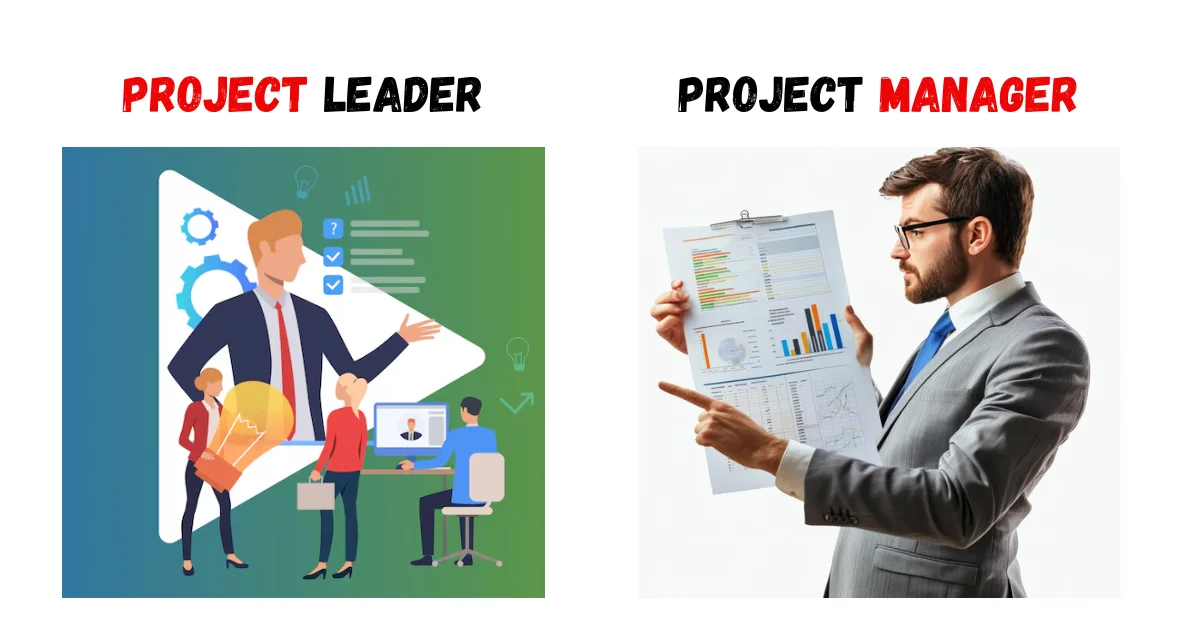
Project Leader vs Project Manager - Key Differences


Ready to see what accurate, automated time tracking looks like for your team?
Start your free 14-day trial of TeamTrackin today — no credit card required, full access from day one.
Start Free Trial