
Employee monitoring has evolved. It’s no longer just about tracking time, logging activity, or watching screens. In today’s workplace, especially with the rise of remote and hybrid teams, monitoring is really about finding the right balance between visibility and trust. Employees want to feel respected. Businesses still need insight. When those two goals collide, privacy-first employee monitoring becomes the solution. Rather than relying on hidden tracking or overly strict oversight,privacy-first employee monitoring prioritizes transparency, clear intent, and responsible data use. When done correctly, it helps organizations improve productivity without damaging employee morale. This guide explains what privacy-first monitoring truly means, why it matters now more than ever, and how companies can develop effective monitoring policies. Work has changed dramatically over the past few years. Employees are working from home, from shared offices, and sometimes across multiple time zones. With that shift has come a stronger awareness of data privacy and personal boundaries. People want to know how their information is collected and how it’s used. At the same time, managers still need a clear view of performance, productivity, and workload distribution. Traditional employee monitoring approaches often struggle here because they focus too much on control and not enough on trust. Privacy-first employee monitoring bridges that gap. It allows companies to maintain visibility while respecting employees as professionals, not suspects. When monitoring feels fair and transparent, employees are more likely to accept it and even see value in it. Privacy-first employee monitoring is an approach built around clarity and purpose. Employees are informed about what data is being collected, why it’s needed, and how it supports their work rather than working against them. Unlike traditional monitoring, which may rely on constant observation or hidden tracking, privacy-first monitoring is open and intentional. The goal is not to watch every action but to understand work patterns, identify productivity trends, and support better outcomes. Data is used to improve performance, guide decisions, and encourage healthy work habits, not to punish or micromanage. Ignoring privacy concerns can create serious problems for organizations, even if monitoring tools are well-intentioned. When employees feel watched rather than supported, trust begins to break down. That loss of trust often leads to lower engagement, reduced motivation, and declining productivity. Over time, morale suffers, and teams become less collaborative. There are also legal and compliance risks. In the United States, employee monitoring generally requires disclosure and reasonable use. Vague or overly aggressive monitoring policies can expose businesses to legal challenges and reputational harm. Perhaps most costly of all is turnover. Employees who feel uncomfortable or unfairly monitored are more likely to look for other opportunities, especially those with in-demand skills. At the center of privacy-first employee monitoring is transparency. Employees should never be left guessing about what is being monitored or how their data is used. Clear communication removes fear and reduces resistance. Another key principle is purpose. Monitoring should exist to improve productivity, balance workloads, and support performance growth, not to create pressure or constant oversight. When monitoring is clearly tied to outcomes rather than individual moments, it feels far more reasonable. Privacy-first monitoring also means collecting only what’s necessary. Limiting data collection and restricting access helps protect employee privacy and builds confidence in the system. Giving employees visibility into their own data further reinforces trust, turning monitoring into a shared resource instead of a management-only tool. Strong monitoring policies start with clarity. Employees should understand exactly what is being tracked, what is not tracked, and when monitoring applies. This removes uncertainty and helps set realistic expectations. Equally important is explaining why monitoring exists in the first place. When employees understand that monitoring supports better planning, fair evaluations, or burnout prevention, they are far more likely to accept it. Policies should also align monitoring with performance goals rather than surface-level activity. Focusing on results, consistency, and progress makes monitoring feel relevant and fair. As work models, tools, and regulations change, these policies should be reviewed and updated to stay effective. Remote work often increases the temptation to monitor more closely, but that approach usually backfires. Ethical monitoring for remote and hybrid teams focuses on outcomes, not constant activity. Privacy-first employee monitoring supports flexible schedules while still providing insight into project progress and productivity trends. Instead of tracking every click or movement, it emphasizes deliverables, collaboration, and consistency. This approach helps maintain accountability without undermining autonomy. In the United States, employers are generally allowed to monitor work-related activity, but transparency is essential. Employees should be informed about monitoring practices and understand how data is used. Privacy-first monitoring naturally supports compliance by encouraging disclosure, limiting invasive practices, and promoting ethical standards. Beyond legal protection, this transparency strengthens workplace culture and reduces conflict. Not all monitoring tools are built with privacy in mind. Some focus heavily on surveillance, which can quickly damage trust. Privacy-friendly employee monitoring software prioritizes transparency, outcome-based insights, and configurable privacy controls. It allows employees to understand what’s being tracked and why, while providing managers with meaningful data instead of surface-level activity logs. Secure data handling and ethical design are essential for long-term success. TeamTrackin is designed for organizations that want productivity insights without crossing trust boundaries. Instead of focusing on constant supervision, TeamTrackin helps teams understand productivity trends and work patterns transparently. By emphasizing data-driven insights over micromanagement, TeamTrackin supports ethical monitoring for both in-office and remote teams. Managers can make informed decisions, coach effectively, and improve workflows without invading employee privacy. The result is a monitoring system that feels supportive rather than restrictive. Successful implementation depends on communication. Managers should be trained to use monitoring data responsibly, and employees should feel comfortable asking questions or giving feedback. When monitoring is positioned as a tool for improvement rather than control, it becomes part of a healthy work environment. Regular reviews of monitoring practices help ensure policies remain fair, relevant, and aligned with business goals. Privacy-first employee monitoring isn’t about tracking less; it’s about tracking with intention. When businesses choose transparency, purpose, and respect, monitoring becomes a tool for growth instead of a source of tension. Organizations that adopt privacy-first monitoring build stronger trust, improve engagement, and make better long-term decisions. In the modern workplace, productivity and privacy are not opposites; they work best together. What is privacy-first employee monitoring? It’s an ethical approach to monitoring where employees are informed, privacy is respected, and data is used to support performance, not surveillance. Is privacy-first monitoring legal in the US? Yes, when employees are informed, and monitoring focuses on work-related activity. How do you monitor remote employees without invading their privacy? By tracking outcomes and productivity trends instead of constant activity or screen monitoring. Does privacy-first monitoring improve productivity? Yes. Transparency builds trust, which leads to higher engagement and better performance.Why Privacy-First Employee Monitoring Matters More Than Ever
What Is Privacy-First Employee Monitoring?
The Real Risks of Ignoring Employee Privacy
Core Principles of Privacy-First Employee Monitoring
How to Create Privacy-First Employee Monitoring Policies That Work
Privacy-First Monitoring for Remote and Hybrid Teams
Privacy-First Employee Monitoring Laws and Compliance in the US
Choosing Privacy-Friendly Employee Monitoring Software
How TeamTrackin Supports Privacy-First Employee Monitoring
Making Privacy-First Monitoring Work in Practice
Conclusion
Frequently Asked Questions
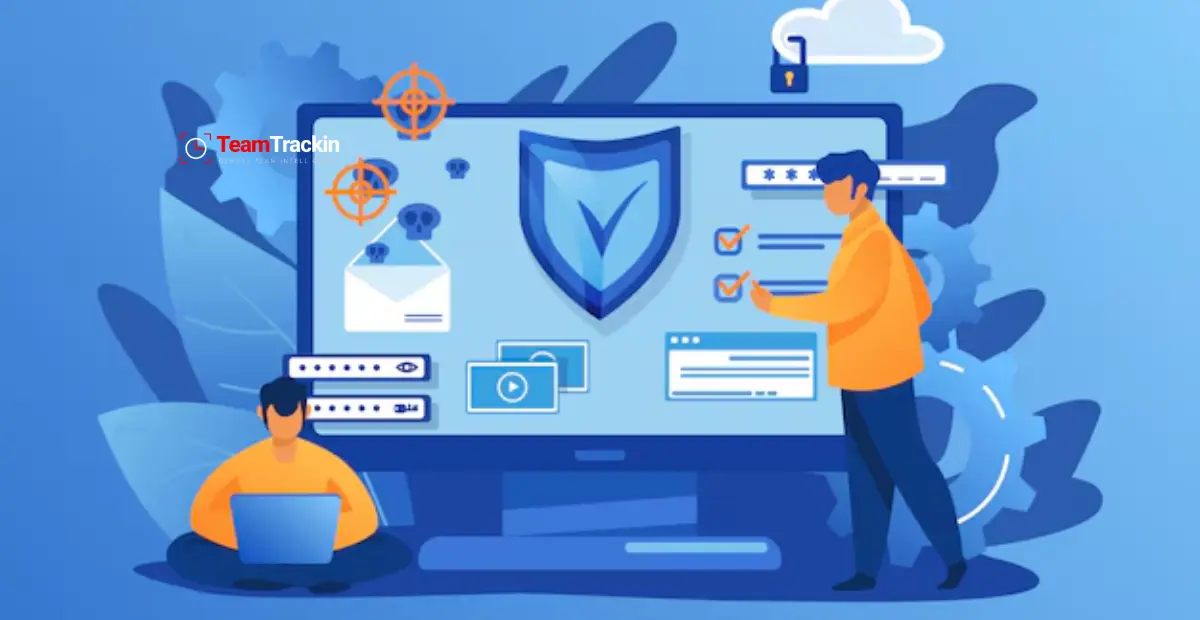
Privacy-First Employee Monitoring: Policies That Work
Ready to see what accurate, automated time tracking looks like for your team?
Start your free 14-day trial of TeamTrackin today — no credit card required, full access from day one.
Start Free Trial