
Employee monitoring has become a necessary part of modern work, but it’s also one of the fastest ways to damage trust if done incorrectly. With remote and hybrid work now the norm, many leaders are asking the same question: how to monitor employees without making them feel watched, controlled, or disrespected. The good news is that monitoring employees doesn’t have to hurt morale. When done transparently and ethically, it can actually improve productivity, clarity, and engagement. This guide explains how to monitor employees, especially remote and work-from-home teams, while maintaining trust and respect. Most trust issues don’t come from monitoring itself; they come from how it’s implemented. Traditional monitoring approaches focused heavily on control: Tracking every click or keystroke Monitoring employees’ computer activity without explanation Measuring hours instead of outcomes When employees don’t understand why they’re being monitored or how data is used, they assume the worst. That’s when resistance, disengagement, and burnout start to appear. To avoid this, businesses must rethink how to monitor employees at work in a more human, transparent way. The foundation of trust-based monitoring is transparency. Before implementing any system, clearly communicate: What data is being collected How monitoring works What the data will (and won’t) be used for Whether you’re learning how to monitor remote employees or how to monitor work from home employees, openness is non-negotiable. Employees should never feel like monitoring is happening behind their backs. When people understand the purpose better, workload balance, clearer expectations, and fair evaluations, they’re far more likely to accept monitoring as a support tool, not a threat. One of the biggest mistakes companies make is obsessing over activity instead of results. Tracking mouse movement or screen time alone doesn’t tell you: Whether work is meaningful If goals are being met How efficiently tasks are completed Instead of asking how to monitor employees computer activity minute by minute, shift the focus to how to monitor performance of employees. Performance-based monitoring looks at: Task completion Project progress Productivity trends over time Quality of output This approach respects autonomy while still giving managers the visibility they need. Remote work creates unique challenges. Managers can’t rely on physical presence, which often leads to over-monitoring. If you’re figuring out how to monitor employees working from home, the goal should be visibility, not control. Best practices include: Tracking work hours at a high level, not obsessively Monitoring project milestones instead of screen time Reviewing productivity trends weekly, not hourly Learning how to monitor work at home employees successfully means trusting professionals to manage their time while holding them accountable for results. There are legitimate reasons to understand how to monitor employees computer usage, security, compliance, and productivity insights, for example. However, ethical monitoring tools should: Avoid invasive data collection Exclude personal information Focus on work-related activity only Offer aggregated insights instead of individual surveillance When companies clearly explain how to monitor employees computer activity and set boundaries, employees are far more comfortable with these tools. Micromanagement is where trust truly breaks down. If employees feel constantly watched, productivity drops instead of improving. To avoid this: Measure trends, not moments Review data for patterns, not isolated behavior Use insights for coaching, not punishment Learning how to monitor your employees effectively means stepping back and letting data guide smarter conversations, not daily pressure. One of the most overlooked trust-building strategies is giving employees access to their own data. When teams can see: Their productivity trends Workload distribution Progress over time Monitoring becomes collaborative instead of authoritative. This approach dramatically improves acceptance and engagement. It also strengthens how to monitor employees performance, because feedback is grounded in shared, objective data. Monitoring without clear goals feels pointless and intrusive. Before tracking anything, define: What success looks like Which metrics actually matter How productivity will be evaluated This clarity helps employees understand how to monitor employees at work in a way that aligns with business outcomes, not arbitrary rules. Inconsistent monitoring destroys credibility fast. To maintain trust: Apply monitoring rules equally across teams Avoid targeting specific individuals Use the same metrics for remote and in-office staff Whether you’re managing office teams or learning how to monitor remote employees, consistency signals fairness, and fairness builds trust. At its best, employee monitoring helps: Identify workload imbalances Prevent burnout Improve project planning Enable better decision-making At its worst, it creates fear and disengagement. The difference lies in intent and execution. Companies that understand how to monitor employees performance ethically use data to support people, not police them. Monitoring employees doesn’t have to hurt trust, but it absolutely can if done wrong. The modern approach to how to monitor employees is built on: Transparency Outcome-based measurement Ethical technology Mutual respect When monitoring focuses on performance instead of constant activity, employees feel trusted, valued, and motivated. And when trust is protected, productivity follows naturally. In today’s remote-first world, the companies that succeed aren’t the ones watching the closest; they’re the ones measuring the smartest. How can employers monitor employees without hurting trust? Employers can monitor employees without hurting trust by being transparent about monitoring practices, focusing on performance instead of constant activity, and using data to support productivity rather than micromanagement. Is employee monitoring ethical for remote workers? Yes, employee monitoring can be ethical for remote workers when employees are informed, data collection is limited to work-related activity, and monitoring is used to improve performance and workload balance. How do you monitor employees working from home effectively? The most effective way to monitor employees working from home is to track project progress, productivity trends, and outcomes rather than constant screen or activity monitoring. What is the best way to monitor employee performance? The best way to monitor employee performance is by setting clear goals, tracking productivity trends over time, and using performance data for coaching and improvement rather than punishment. Does monitoring employees reduce trust? Monitoring employees does not reduce trust when it is done transparently, ethically, and with a clear focus on performance outcomes rather than surveillance or micromanagement.Why Employee Monitoring Often Damages Trust
Start With Transparency, Not Surveillance
Focus on Performance, Not Constant Activity
How to Monitor Employees Working From Home the Right Way
Use Ethical Tools to Monitor Employee Computer Usage
How to Monitor Employees Without Micromanaging
Make Monitoring a Two-Way Process
Align Monitoring With Clear Goals
Build Trust With Consistency and Fairness
Monitoring Should Support, Not Control
Conclusion
FAQs
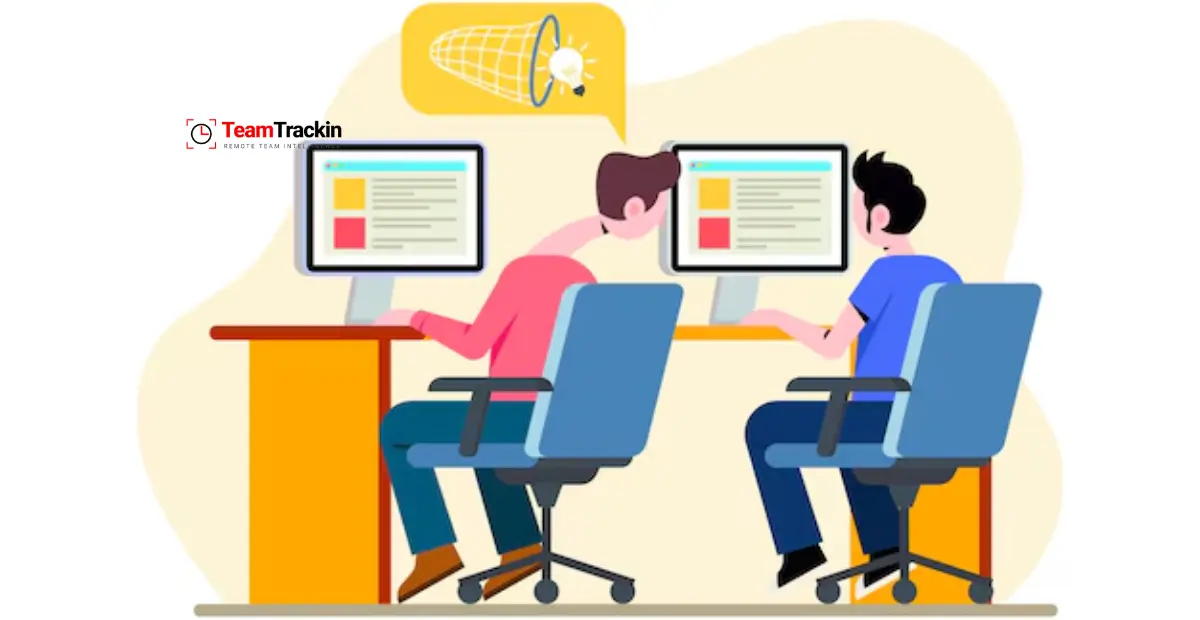
How to Monitor Employees Without Hurting Trust
Ready to see what accurate, automated time tracking looks like for your team?
Start your free 14-day trial of TeamTrackin today — no credit card required, full access from day one.
Start Free Trial