
Every business owner, team lead, and HR manager asks the same question: how do you consistently increase staff productivity without burning people out or micromanaging every minute of the day? The honest answer is that it's never just one thing — it's a system. When your team is engaged, well-supported, and working with the right tools, output improves naturally. This guide breaks down proven strategies — from how to motivate staff to increase productivity, to building smarter workflows — that actually work in real SaaS and remote environments. 📌 Key Insight: Organizations using data-driven workforce tools report up to 23% higher productivity compared to those relying on manual tracking alone. Before implementing any productivity strategy, you need clarity on where time is really going. Most managers assume their teams are losing time to laziness or distraction — but the data tells a different story. Common productivity killers in modern workplaces include: Poorly organized tasks and unclear priorities Too many meetings with no clear outcomes Lack of visibility into project progress Manual processes that should be automated Communication bottlenecks between departments Using a workforce analytics platform like TeamTrackin gives managers real-time visibility into how time is being spent across teams — without relying on guesswork or hand-collected reports. You can have all the right processes in place, but if your team isn't motivated, results will always fall short. Here's how to build genuine motivation — not just temporary enthusiasm: Employees are far more productive when they understand why their work matters. Connect individual tasks to larger business outcomes. Instead of "complete 10 tickets this week," try "your support work directly impacts our monthly retention rate — here's how. Recognition is one of the most underused tools in productivity management. A simple, specific acknowledgment — "Your documentation saved the onboarding team three hours this week" — goes further than a generic bonus. Build a culture where wins are visible. Team dashboards, shout-out channels, and performance reviews that highlight specific contributions all reinforce productive behaviors. Micromanagement destroys morale and slows output. Give your team control over how they achieve their goals, while maintaining clear accountability on what gets done and by when. Tools like TeamTrackin help you shift from "are people working?" to "are people delivering?" — a much healthier management mindset. People work harder for companies that invest in them. Offer learning budgets, internal training, or mentorship programs. When staff feel they're growing professionally, engagement — and productivity — naturally increases. Even highly motivated employees hit productivity ceilings when workflows are inefficient. The goal is to remove friction so your team can focus on high-value work. Not all tasks are created equal. Implement a prioritization framework like Eisenhower Matrix or MoSCoW Method to help teams distinguish between urgent and important. When everything is a priority, nothing is. According to multiple workplace studies, the average knowledge worker loses over 30% of their week to unnecessary meetings. Audit your recurring meetings. If a meeting can be an update in a project tool, it should be. For meetings that must happen, require a clear agenda, set a hard end time, and send action items within 24 hours. These three steps alone can dramatically improve output. Manual reporting, status updates, time logging — these are all tasks that drain focus without adding strategic value. Automate wherever possible. Platforms built for workforce productivity, like TeamTrackin, automate time tracking and generate performance reports automatically — freeing managers to coach rather than chase data. Context switching is one of the biggest invisible productivity drains. Encourage your team to batch similar tasks — for example, answering all emails in two 30-minute windows instead of checking constantly throughout the day. The environment in which people work — physically or virtually — has a measurable impact on output. This is especially relevant for remote and hybrid teams. Establish core collaboration hours so everyone knows when to expect real-time responses Create dedicated async communication norms — not every message needs an instant reply Invest in proper equipment — a team struggling with slow internet or inadequate setups can't perform at their best Use shared dashboards so remote workers feel connected to team goals and progress Design spaces for both deep focus work and collaboration Minimize open-office distractions during heads-down hours Make it easy for teams to access the information and tools they need without waiting on others Gut instinct has its place, but sustainable productivity improvements come from measuring what matters. This is where modern SaaS tools transform management. With the right workforce analytics, you can identify: Which team members are overloaded and at risk of burnout Where project timelines consistently slip — and why Which workflows are generating the highest output per hour invested Patterns in productivity across different times of day, days of the week, or project types TeamTrackin provides managers with real-time dashboards and automated reports that surface these insights without hours of manual data collection. When you know what the numbers say, you can act with confidence rather than assumption. One-off productivity initiatives rarely stick. What lasts is a culture that values focused work, clear communication, and continuous improvement. Here's how to build that culture: Managers who work with focus, communicate clearly, and respect their own boundaries set the tone for their entire team. Culture is caught, not taught. Monthly or quarterly team retrospectives — "what's working, what's not, what should we change?" — create a habit of reflection and continuous improvement. They also give staff a voice, which directly impacts engagement. Being busy is not the same as being productive. Discourage long hours as a badge of honor. Celebrate outcomes and results — not just effort or visibility. Teams that feel safe to work smartly rather than visibly consistently outperform those that don't. Everything discussed in this guide — goal clarity, accountability, workflow visibility, data-driven decisions — is what TeamTrackin is built to support. TeamTrackin is a SaaS workforce management platform that helps businesses: Track time and attendance automatically across remote, hybrid, and office teams Monitor task progress and project health in real time Generate productivity reports without manual data entry Identify bottlenecks and overload before they become problems Keep distributed teams aligned on shared goals Whether you manage a team of 5 or 500, having centralized visibility into how your workforce operates is the single most effective foundation for sustainable productivity improvement. 🚀 Ready to boost productivity? Start your free trial at https://teamtrackin.com and see measurable results within your first 30 days. Learning how to increase staff productivity is not about squeezing more hours out of people — it's about creating an environment, culture, and toolset where great work can happen naturally. The most productive teams share a few things in common: they have clear goals, real autonomy, meaningful recognition, efficient workflows, and managers who use data to coach rather than control. Start by fixing one friction point this week. Audit your meeting schedule. Set up a shared dashboard. Recognize a team member's specific contribution. Small, consistent changes compound into significant productivity gains over time.1. Understand What's Actually Slowing Your Team Down
2. How to Motivate Staff to Increase Productivity
Set Clear, Meaningful Goals
Recognize and Reward Consistently
Give Autonomy With Accountability
Invest in Their Growth
3. How to Increase Worker Productivity Through Smarter Workflows
Prioritize Ruthlessly
Reduce Meeting Overload
Automate Repetitive Tasks
Batch Similar Work Together
4. Create a Productive Work Environment
For Remote & Hybrid Teams
For Office-Based Teams
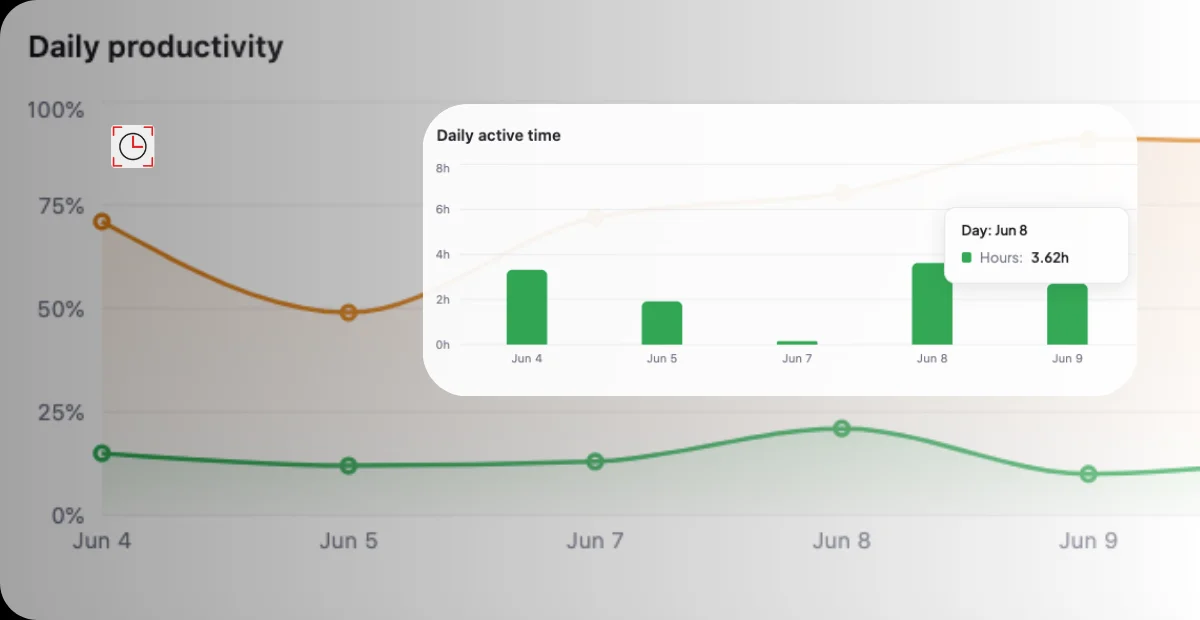
5. Use Data to Drive Productivity Decisions
6. Build a Culture That Sustains Productivity Long-Term
Model the Behavior You Want to See
Run Regular Retrospectives
Avoid Productivity Theater
7. How TeamTrackin Helps You Increase Staff Productivity
Final Thoughts
How to Increase Staff Productivity: A Complete Guide for Modern Teams
Ready to see what accurate, automated time tracking looks like for your team?
Start your free 14-day trial of TeamTrackin today — no credit card required, full access from day one.
Start Free Trial